


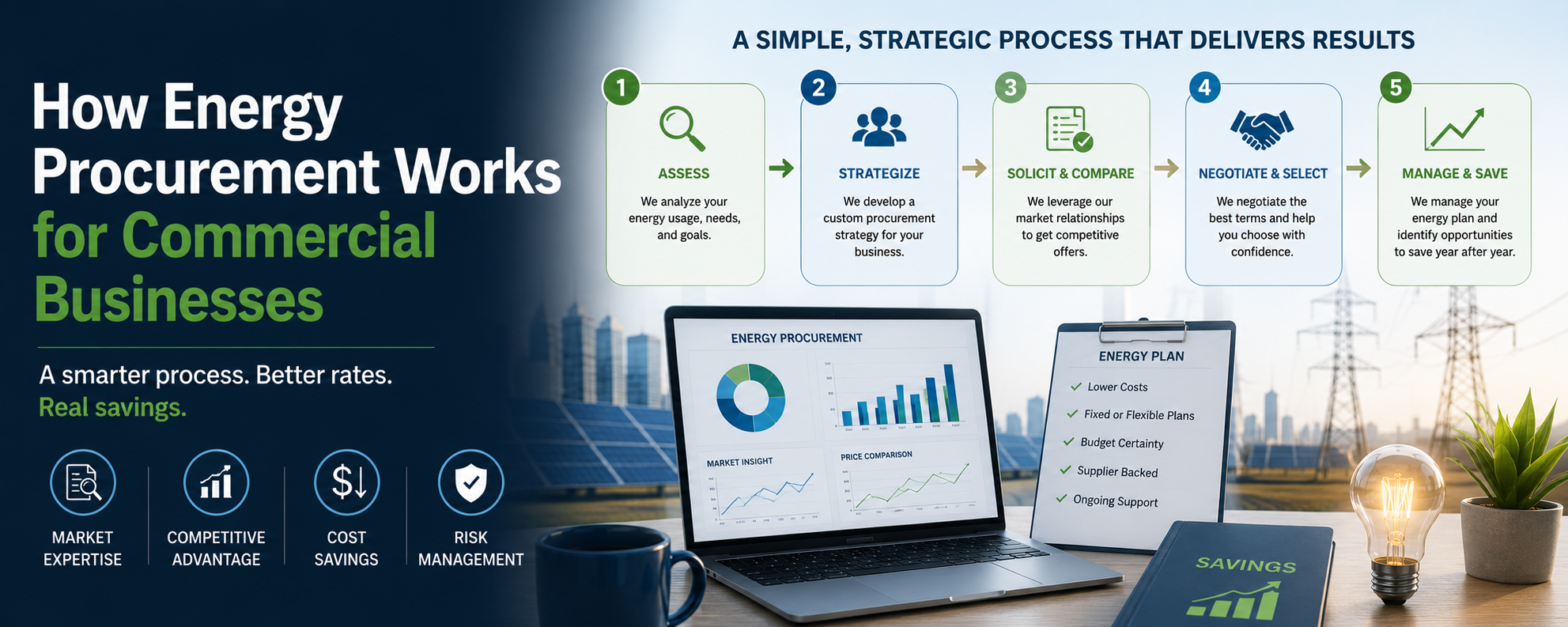
How Energy Procurement Works for Commercial Businesses
Energy is one of the most significant operating expenses for commercial businesses. Whether you manage a small office, retail store, hotel, manufacturing plant, warehouse, or multi-site organization, purchasing electricity and gas at competitive rates can have a major impact on your profitability.
However, buying energy for a business is far more complex than selecting a residential electricity plan. Commercial energy procurement involves understanding market trends, comparing suppliers, choosing the right contract, and managing renewals to ensure your business receives the best possible value.
Many companies overpay for electricity simply because they don’t fully understand how commercial energy procurement works.
In this guide, we’ll explain the entire energy procurement process, why it’s important, and how businesses can use it to reduce energy costs while improving long-term financial planning.
What Is Energy Procurement?
Energy procurement is the process of purchasing electricity and natural gas for a commercial business.
Rather than simply accepting the first offer from an energy supplier, procurement involves carefully researching the market, comparing prices, evaluating contract options, and selecting the supplier that best meets a company’s needs.
The goal is to secure reliable energy at the most competitive price while reducing financial risk.
A well-planned procurement strategy helps businesses control costs, improve budgeting, and avoid expensive contracts.
Why Is Energy Procurement Important?
Electricity prices constantly change due to factors such as:
-
Supply and demand
-
Wholesale energy markets
-
Weather conditions
-
Fuel prices
-
Government regulations
-
Global economic events
Without a procurement strategy, businesses may:
-
Pay higher electricity rates
-
Miss opportunities to lock in lower prices
-
Renew expensive contracts automatically
-
Choose unsuitable tariffs
-
Lose control over operating costs
Effective procurement helps businesses make informed purchasing decisions instead of reacting to changing prices.
How Commercial Energy Procurement Works
Energy procurement follows a structured process that helps businesses secure the right contract.
Let’s look at each stage.
Step 1: Analyze Your Energy Usage
The first step is understanding how your business uses electricity and gas.
This usually involves reviewing:
-
Annual energy consumption
-
Monthly usage patterns
-
Peak demand periods
-
Operating hours
-
Seasonal fluctuations
-
Future growth plans
Accurate consumption data allows businesses to purchase contracts that match their actual energy requirements.
Without this information, businesses risk selecting contracts that are too expensive or unsuitable.
Step 2: Review Your Current Contract
Before purchasing new energy, businesses should review their existing agreement.
Important details include:
-
Contract end date
-
Unit rates
-
Standing charges
-
Supplier terms
-
Early termination fees
-
Renewal conditions
Many companies discover they are paying outdated rates or are close to automatic renewal deadlines.
Reviewing the contract early provides more time to explore better options.
Step 3: Monitor the Energy Market
Commercial energy prices change daily.
Businesses that understand market conditions can often purchase contracts when prices are more favorable.
Factors affecting prices include:
-
Seasonal demand
-
Natural gas prices
-
Renewable energy production
-
Weather forecasts
-
International events
-
Inflation
-
Supply chain disruptions
Monitoring these trends allows businesses to make more strategic purchasing decisions.
Step 4: Compare Energy Suppliers
The next step is comparing quotes from multiple suppliers.
Every supplier offers different:
-
Unit rates
-
Standing charges
-
Contract lengths
-
Green energy options
-
Customer service
-
Billing methods
Comparing multiple suppliers ensures businesses don’t overpay simply because they accepted the first offer available.
Competition between suppliers often leads to better pricing.
Step 5: Choose the Right Contract Type
Selecting the correct pricing structure is one of the most important parts of procurement.
Businesses typically choose between:
Fixed-Rate Contracts
These lock in electricity prices for the entire contract period.
Benefits include:
-
Stable pricing
-
Predictable budgeting
-
Protection from market increases
Variable-Rate Contracts
These follow market prices.
Benefits include:
-
Greater flexibility
-
Potential savings if prices fall
-
Shorter commitments
However, costs may increase if market prices rise.
Flexible Purchasing Contracts
Larger businesses sometimes purchase energy in stages rather than buying all of their electricity at once.
This strategy spreads market risk and allows companies to take advantage of changing prices throughout the year.
Step 6: Negotiate Better Pricing
Commercial energy pricing is often negotiable.
Businesses that negotiate effectively may receive:
-
Lower unit rates
-
Reduced standing charges
-
Better contract terms
-
More flexible payment options
Many companies rely on energy brokers to negotiate with suppliers on their behalf because brokers understand market pricing and supplier strategies.
Step 7: Finalize the Agreement
Once the best supplier and pricing structure have been selected, the contract is finalized.
The agreement usually includes:
-
Contract duration
-
Electricity rates
-
Standing charges
-
Billing terms
-
Renewal dates
-
Exit conditions
Before signing, businesses should carefully review all contract terms to avoid unexpected costs later.
Step 8: Monitor Energy Performance
Energy procurement doesn’t end after signing a contract.
Successful businesses continue monitoring:
-
Monthly energy usage
-
Electricity bills
-
Market changes
-
Operational efficiency
-
Future contract opportunities
Regular reviews help identify additional savings and prepare businesses for future renewals.
Common Types of Commercial Energy Contracts
Businesses have several procurement options depending on their needs.
Fixed Contracts
Ideal for businesses seeking budget certainty.
Variable Contracts
Suitable for companies willing to accept market risk.
Renewable Energy Contracts
These provide electricity generated from renewable sources such as wind or solar power.
Many businesses choose green energy contracts to support sustainability goals.
Multi-Site Contracts
Designed for organizations operating multiple business locations.
These contracts simplify billing and often improve purchasing power.
Factors That Affect Commercial Energy Prices
Several factors influence the rates businesses receive.
Energy Consumption
Higher annual usage often results in more competitive pricing.
Business Location
Regional network costs and infrastructure affect electricity pricing.
Industry Type
Manufacturing businesses typically have different energy requirements than offices or retail stores.
Contract Length
Longer contracts may offer lower rates but reduce flexibility.
Market Conditions
Wholesale electricity prices directly influence commercial energy offers.
Credit Profile
Some suppliers consider a business’s financial standing when offering pricing.
Benefits of a Strong Energy Procurement Strategy
Businesses that actively manage procurement often enjoy several long-term advantages.
Lower Energy Costs
Comparing suppliers and negotiating contracts helps reduce electricity expenses.
Better Budget Planning
Predictable energy costs improve financial forecasting and cash flow management.
Reduced Risk
A well-planned procurement strategy protects businesses from sudden market increases.
Improved Efficiency
Monitoring energy usage helps identify waste and encourages energy-saving initiatives.
More Competitive Business Operations
Lower operating expenses allow businesses to invest more in growth and customer service.
Common Procurement Mistakes Businesses Make
Many companies unintentionally increase their energy costs by making avoidable mistakes.
These include:
-
Automatically renewing contracts
-
Waiting until the last minute to compare suppliers
-
Choosing contracts based only on price
-
Ignoring standing charges
-
Failing to monitor market conditions
-
Not reviewing changing business needs
-
Overlooking hidden fees
Avoiding these mistakes can result in significant savings over the life of a contract.
How Energy Brokers Support the Procurement Process
Managing commercial energy procurement requires time and expertise.
Energy brokers simplify the entire process by:
-
Comparing multiple suppliers
-
Monitoring market prices
-
Negotiating contracts
-
Reviewing energy bills
-
Managing renewals
-
Providing procurement advice
-
Assisting with supplier switching
Instead of handling procurement alone, businesses gain access to industry knowledge and competitive supplier pricing.
Best Practices for Commercial Energy Procurement
To maximize savings, businesses should follow these best practices:
-
Review energy contracts well before renewal dates.
-
Compare multiple supplier quotes.
-
Analyze annual energy usage.
-
Monitor wholesale market trends.
-
Choose the right contract type.
-
Conduct regular energy bill reviews.
-
Improve energy efficiency throughout the business.
-
Partner with an experienced energy broker.
These steps help businesses reduce costs while maintaining reliable energy supply.
Future Trends in Commercial Energy Procurement
Energy procurement continues to evolve as businesses focus on cost control and sustainability.
Emerging trends include:
-
Greater use of renewable energy contracts
-
Smart meters and real-time monitoring
-
Artificial intelligence for energy forecasting
-
Flexible purchasing strategies
-
Carbon reduction initiatives
-
Energy efficiency technologies
Businesses that adapt to these trends can improve both financial performance and environmental responsibility.
Final Thoughts
Commercial energy procurement is much more than simply choosing an electricity supplier. It is a strategic process that helps businesses secure competitive pricing, reduce operating costs, and improve long-term financial planning.
From analyzing energy usage and comparing suppliers to negotiating contracts and monitoring market conditions, every step plays an important role in controlling energy expenses.
Businesses that take a proactive approach to procurement are better positioned to avoid costly mistakes, manage market risks, and achieve meaningful savings over time.
Working with an experienced energy broker can make this process even more effective by providing expert market insights, supplier comparisons, and ongoing contract support. Whether your business operates from a single location or across multiple sites, a well-planned energy procurement strategy can help you gain greater control over your electricity costs and build a stronger, more cost-efficient future.


