


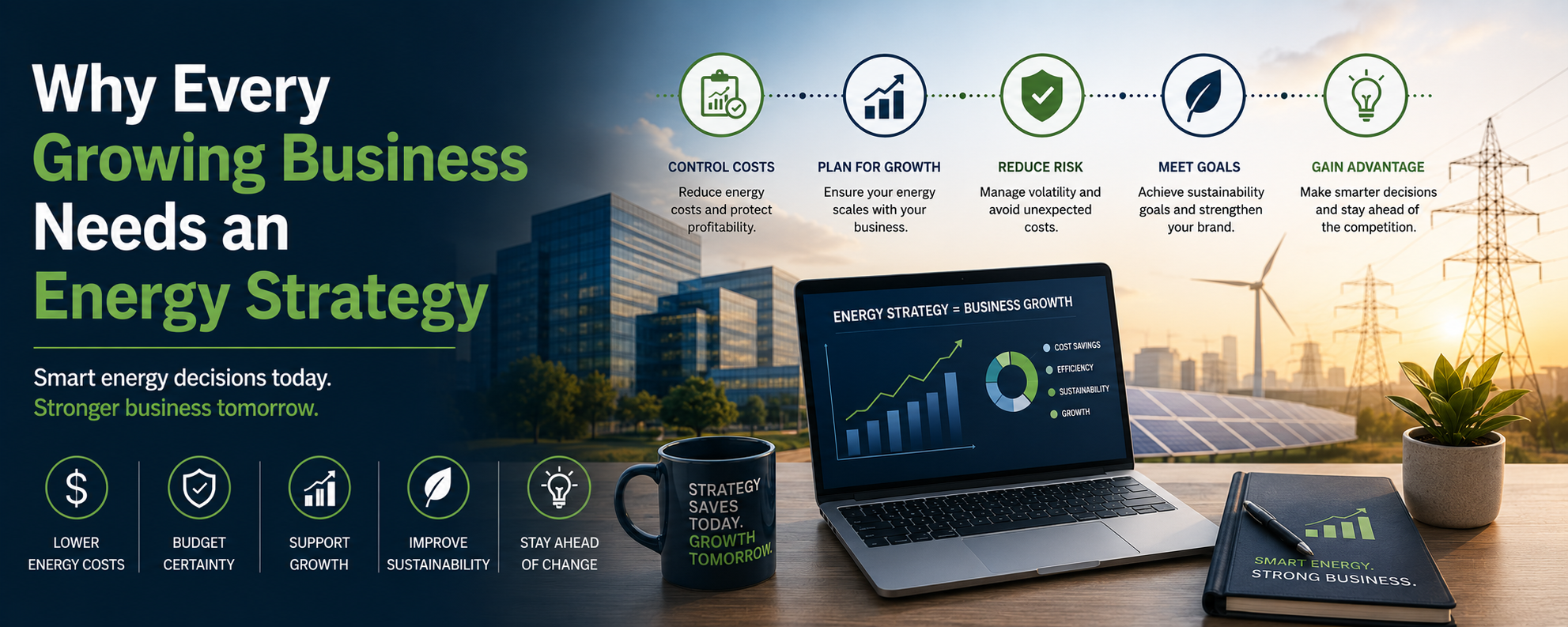
Why Every Growing Business Needs an Energy Strategy
As businesses grow, so do their operating expenses. One of the most significant and often overlooked costs is energy. Whether you’re expanding your office, opening new locations, increasing production, or hiring more employees, your electricity and gas consumption is likely to rise alongside your business.
Many companies focus on sales, marketing, staffing, and operations while treating energy as a fixed monthly expense. However, without a clear energy strategy, businesses can end up paying far more than necessary, reducing profits and limiting opportunities for growth.
An energy strategy is more than simply choosing an electricity supplier. It is a long-term plan that helps businesses manage energy consumption, control costs, reduce waste, and prepare for future growth.
In this guide, we’ll explain why every growing business needs an energy strategy, the key components of an effective plan, and how it can improve your company’s financial performance.
What Is an Energy Strategy?
An energy strategy is a structured approach to managing how your business purchases, uses, and monitors electricity and gas.
Instead of reacting to rising utility bills, businesses with an energy strategy make informed decisions about:
-
Energy procurement
-
Supplier selection
-
Contract management
-
Energy efficiency
-
Cost reduction
-
Sustainability goals
-
Long-term budgeting
The objective is to reduce unnecessary expenses while ensuring reliable energy supply for daily operations.
Why Energy Matters More as Your Business Grows
Growth usually means increased energy consumption.
For example, a growing business may:
-
Expand office space
-
Purchase additional equipment
-
Hire more employees
-
Extend operating hours
-
Open new branches
-
Increase manufacturing output
While these changes support business growth, they also increase electricity and gas usage.
Without careful planning, energy costs can rise faster than expected and negatively affect profitability.
An energy strategy helps businesses manage this growth efficiently.
Benefits of Having an Energy Strategy
A well-planned energy strategy provides several long-term advantages.
1. Lower Operating Costs
Energy is one of the largest controllable business expenses.
By reviewing contracts, comparing suppliers, and improving energy efficiency, businesses can significantly reduce monthly utility costs.
These savings can then be invested in:
-
Business expansion
-
New technology
-
Staff development
-
Marketing
-
Customer service
Lower operating costs improve overall profitability.
2. Better Budget Planning
Unexpected energy price increases can disrupt financial planning.
An energy strategy allows businesses to:
-
Forecast future costs
-
Choose suitable contracts
-
Reduce price uncertainty
-
Improve cash flow management
Predictable energy expenses make budgeting easier throughout the year.
3. Protection Against Rising Energy Prices
Energy markets constantly change due to:
-
Global demand
-
Fuel prices
-
Weather conditions
-
Government policies
-
Supply shortages
-
Economic events
Businesses with a clear strategy can secure contracts at the right time and reduce exposure to sudden price increases.
4. Improved Energy Efficiency
Reducing energy waste is just as important as negotiating lower prices.
An energy strategy identifies opportunities to improve efficiency through measures such as:
-
LED lighting
-
Smart thermostats
-
Energy-efficient equipment
-
Better insulation
-
Automated controls
-
Regular equipment maintenance
Lower energy consumption leads to lower utility bills.
5. Support for Business Growth
As your business expands, your energy requirements will change.
An energy strategy ensures your electricity supply keeps pace with growth while maintaining cost efficiency.
Whether opening a second location or increasing production capacity, planning ahead prevents costly surprises.
Key Components of an Effective Energy Strategy
A successful energy strategy combines several important elements.
Energy Procurement
Purchasing energy strategically is one of the most effective ways to reduce costs.
This involves:
-
Comparing suppliers
-
Monitoring market prices
-
Negotiating contracts
-
Reviewing renewal dates
Rather than automatically renewing existing contracts, businesses actively seek competitive pricing.
Energy Monitoring
Understanding how your business uses electricity is essential.
Monitoring helps identify:
-
Peak usage periods
-
Inefficient equipment
-
Unexpected increases
-
Opportunities for savings
Smart meters and energy management systems provide valuable data for decision-making.
Contract Management
Many businesses lose money because they fail to monitor contract renewal dates.
An effective strategy includes:
-
Tracking contract expiry dates
-
Reviewing market conditions before renewal
-
Comparing alternative suppliers
-
Avoiding automatic renewals
Managing contracts proactively often results in lower energy costs.
Energy Efficiency Improvements
Reducing waste should always be part of an energy strategy.
Examples include:
-
Switching to LED lighting
-
Installing occupancy sensors
-
Maintaining heating and cooling systems
-
Upgrading outdated machinery
-
Improving insulation
-
Encouraging energy-saving habits among employees
Even small improvements can produce meaningful savings over time.
Sustainability Planning
Many businesses now include sustainability within their energy strategy.
This may involve:
-
Choosing renewable electricity
-
Reducing carbon emissions
-
Installing solar panels
-
Tracking environmental performance
-
Meeting sustainability goals
These initiatives not only reduce environmental impact but can also improve brand reputation.
Signs Your Business Needs an Energy Strategy
Many businesses don’t realize they’re missing an energy plan.
You may benefit from an energy strategy if:
-
Electricity bills continue to increase.
-
Your business is expanding.
-
You operate multiple locations.
-
You haven’t reviewed your energy contract recently.
-
Your energy usage isn’t monitored.
-
You automatically renew supplier contracts.
-
You don’t know when your contract expires.
If any of these situations sound familiar, developing an energy strategy could significantly improve cost control.
Common Mistakes Growing Businesses Make
Many companies unintentionally increase energy costs by making avoidable mistakes.
Treating Energy as a Fixed Expense
Businesses often assume energy costs cannot be controlled.
In reality, procurement decisions and efficiency improvements can substantially reduce expenses.
Failing to Compare Suppliers
Remaining with the same supplier year after year often means missing more competitive pricing elsewhere.
Ignoring Market Trends
Energy prices change frequently.
Businesses that fail to monitor the market may lock into expensive contracts.
Delaying Contract Reviews
Waiting until the last minute reduces negotiation opportunities and increases the risk of expensive automatic renewals.
Overlooking Energy Waste
Leaving equipment running overnight, inefficient lighting, and poor maintenance all contribute to higher electricity bills.
How an Energy Broker Supports Your Energy Strategy
Creating an effective energy strategy can be time-consuming.
An experienced energy broker helps businesses by:
-
Reviewing current contracts
-
Comparing multiple suppliers
-
Monitoring wholesale energy markets
-
Negotiating competitive pricing
-
Managing contract renewals
-
Providing energy-saving recommendations
-
Supporting long-term procurement planning
Working with an energy broker allows businesses to make informed decisions without dedicating internal resources to monitoring the energy market.
Energy Strategy for Multi-Site Businesses
Businesses operating multiple locations often face additional challenges.
Different sites may have:
-
Different suppliers
-
Separate contracts
-
Various renewal dates
-
Inconsistent energy usage
A centralized energy strategy helps standardize procurement, improve reporting, simplify billing, and reduce overall energy costs.
Many businesses also negotiate portfolio contracts that cover multiple locations under a single agreement.
Technology’s Role in Energy Management
Modern technology makes energy management more effective than ever.
Businesses can use:
-
Smart meters
-
Energy management software
-
Automated building controls
-
Usage monitoring dashboards
-
AI-powered analytics
-
Real-time reporting tools
These technologies help identify waste, improve efficiency, and support better procurement decisions.
Long-Term Benefits of an Energy Strategy
Businesses that invest in a long-term energy strategy often experience lasting benefits.
These include:
-
Reduced operating expenses
-
Improved budgeting
-
Increased profitability
-
Better financial planning
-
Greater operational efficiency
-
Lower environmental impact
-
Stronger competitiveness
-
More predictable energy costs
Rather than reacting to rising bills, businesses take control of their energy future.
Best Practices for Building an Energy Strategy
If you’re developing an energy strategy, consider these practical steps:
-
Review your current energy contracts annually.
-
Monitor electricity and gas usage regularly.
-
Compare suppliers before every renewal.
-
Invest in energy-efficient equipment.
-
Set realistic energy-saving goals.
-
Train employees on energy-saving practices.
-
Use smart monitoring technology.
-
Work with an experienced energy broker.
Following these practices creates a solid foundation for long-term cost savings.
The Future of Business Energy Management
Energy management continues to evolve as businesses embrace new technologies and sustainability initiatives.
Future trends include:
-
Renewable energy procurement
-
Battery storage solutions
-
Electric vehicle charging infrastructure
-
Carbon reduction strategies
-
AI-driven energy forecasting
-
Smart building automation
-
Flexible energy purchasing
Businesses that prepare today will be better positioned for tomorrow’s energy challenges.
Final Thoughts
As your business grows, energy should no longer be viewed as just another monthly expense. It is a strategic resource that directly affects profitability, operational efficiency, and long-term success.
A well-designed energy strategy helps businesses reduce costs, improve budgeting, increase efficiency, and adapt to changing market conditions. From choosing the right supplier and negotiating better contracts to reducing energy waste and planning for future expansion, every decision contributes to stronger financial performance.
Instead of waiting for electricity bills to rise, successful businesses take a proactive approach to energy management. By developing a clear strategy and partnering with an experienced energy broker, your business can gain greater control over energy costs, support sustainable growth, and build a more resilient future.
Investing in an energy strategy today isn’t just about saving money—it’s about creating a smarter, more competitive business that is ready for tomorrow’s opportunities.


